Wednesday, April 10, 2024

Project Components

 I am proud to present...We Are Young: Here & Queer!

Documentary

https://drive.google.com/file/d/1ACENz9NJervsk3gmpDG1xvXmSTqgNTwl/view?usp=sharing

https://www.youtube.com/watch?v=rZokmM0bUYA

Magazine Spread

https://drive.google.com/file/d/1NrjTweFMq4eB-oeh8kuWMU7Jo9jNaswL/view?usp=sharing

Instagram

https://www.instagram.com/hereandqueerdoc/

Enjoy!

And one last quote before I go...

“The aromantic and asexual spectrums weren’t just straight lines. They were radar charts with at least a dozen different axes.”

- Alice Oseman, Loveless

Critical Reflection

We Are Young: Here & Queer is a documentary series about bringing awareness to young people in the LGBTQIA+ community with its excerpt highlighting themes of community, acceptance, awareness, and understanding. Through interviews detailing first-hand experiences and feelings garnered from being a member of the LGBTQIA+ community, the documentary shows how important it is to recognize queer youth and to uplift their voices as they are often underrepresented in society.

My excerpt of We Are Young: Here & Queer, highlights asexuality, an often underrepresented aspect of the LGBTQIA+ community. Along with interviews, the documentary utilizes other techniques such as B-roll, diegetic sound, music, and multiple angles and perspectives to tell Tasha's, the main subject of the excerpt, story. Each of these techniques proved vital in aiding my documentary's message. These techniques were also influenced by other documentaries that inspired me including Paris Is Burning (dir. Jennie Livingston) and Transhood (dir. Sharon Liese). These pieces inspired me in how I approached my project and how I tackled the topics presented in my documentary, which was especially prevalent in the interviews. In Transhood, interviews led the story by depicting how to subjects truly felt about what was happening in the world around them. This is also depicted in We Are Young: Here & Queer. By seeing the technique used in another documentary, I was able to see the impact it had and utilize it in my piece. While these documentaries have influenced the techniques I used to present my piece, I was also inspired by my research on the Queer Youth Movement which is documented on my blog. This research helped me fully flesh out my ideas and highlight the message of my piece, which is to bring awareness to queer youth and to bring LGBTQIA+ topics forward in a positive light. This research allowed me to do that. Through both aspects of my research, I was able to follow the conventions of the documentary genre and use techniques that elevated my piece while still sticking to the norms of the genre.
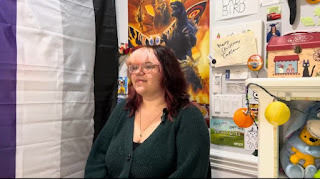

Through my research, I was also able to deduce the target audience of my documentary. We Are Young: Here & Queer is targeted towards a younger demographic of people of all genders aged ten to twenty-one, likely in or an ally of the LGBTQIA+ community and in the middle class. The documentary could also reach an older demographic of people aged between twenty-two and thirty-two, especially if they identify as members of or are activists in the LGBTQIA+ community. This demographic would also be interested in learning about LGBTQIA+ topics and are fans of other media with queer representation. 

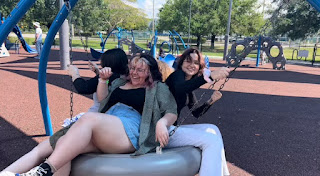
The target audience for my documentary directly correlates with the piece's representation. The main focus of my documentary is the LGBTQIA+ community, specifically teenagers. My excerpt highlights the personal struggles queer teens go through representing their identity, and how a strong bond with friends can be a great support system for someone to authentically express themselves. This is shown through interviews of the main subject and friends of theirs talking about their experiences with them. This is also shown through B-roll of the main subject having fun and spending time with their friends at a park. My excerpt also highlights asexuality. Asexuality is underrepresented in the media and when it is, it is usually shown in a stereotypical or sometimes mocking way. Most people, both in and out of the LGBTQIA+ community, don't really understand it, know what it is, or see it as a "valid" identity. By depicting a genuine account of real experiences from someone who is asexual, I am educating many on an unknown topic and giving a platform to speak about and uplift the experiences of those who may not otherwise be given a platform to speak on these important topics. My documentary is all about highlighting the queer community, being proud to express your identity, and showing others that they are not alone. By highlighting these underrepresented groups, I successfully developed my representation goals and showed society what it means to be a queer teenager.

My target audience and representation are also highlighted in We Are Young: Here & Queer's social media pages. My documentary uses Instagram as a promotional platform and YouTube for mainstream distribution. These social media platforms allow the documentary to be seen by and grow a platform with its audience. Instagram especially, gives an opportunity for the audience to engage and interact with the piece. The Instagram page further gives a behind-the-scenes look at the creative process, details what's coming next for the project, and promotes awareness for LGBTQIA+ topics. The Instagram page also offers a way for young queer people to share their stories and experiences and have them posted to the account. This makes the audience feel less alone and become more aware of what the queer experience is like which highlights the message of the piece. There are also phone wallpapers that the target audience can use to show their pride and express their identity through a device they use every day, which highlights the documentary's themes of identity and pride. 
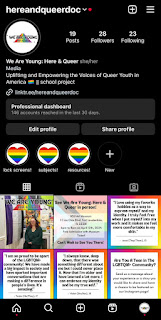

All aspects of my project, my documentary, my social media page, and my magazine spread, work together to create a brand of acceptance, community, and education about queer youth in society. Each aspect does this in different ways, but all share cohesive qualities. They represent equality and acceptance, promote awareness and education, and all use bright colors to convey an appealing and welcoming nature. Examples of this are the Instagram page spreading messages about important LGBTQIA+ ideas and using rainbow colors throughout the account. In addition, the magazine spread provides personal details on the impact of the brand, its message, and why it's so important to society. The documentary contributes to this by giving personal accounts of what it's like and showing the effects of what the brand promotes and the main theme of the brand. 

Through the creation of We Are Young: Here & Queer, I have learned so much about what it means to produce something so personal and impactful. I am very proud of this portfolio project, and that I created something that uplifts the many voices of my community, especially those that may not be the most talked about. I will take everything I learned from this process and evolve it for the future. 

Tuesday, April 9, 2024

Let's Look Back, Shall We

As we approach the end of this journey, I want to look back at my creation process and think about where I am now. I've known what I wanted to create since I heard about the project. As a member of the LGBTQIA+ community, I wanted to create something that made me and the members of my community feel seen in an authentic way. I also wanted to highlight underrepresented groups, especially those in the LGBTQIA+ community, like asexuality to bring more awareness to them. This is exactly what I did and I'm so proud of myself for that.

On the production side of things, I think I did everything pretty efficiently. I did thorough research on my topic and watched documentaries such as, Paris Is Burning and Transhood, to get a good idea as to how to approach my topic. I also planned efficiently to get everything done on time. With some changes along the way, I managed to hit that goal as well. On the filming side of things, it got a bit trickier. I filmed the main interview with no problem. I had appropriate questions, filmed in a timely manner, and got great responses. The problem occurred when it came to the B-Roll. Because I was so limited, with what I could do, it was hard for me to find things to film, even when listening to Tasha's responses. I ended up getting a lot of footage of them talking with their friends but the first time I got footage, it was practically unusable because the lighting was so bad. The interview also ended up being too short so I set up another day of filming more interviews with other friends of Tasha's and going to the park to get B-roll footage and this was immensely successful and vital to my project. Editing was also a bit of a struggle. I got a grove quickly but kept running into technical problems with my clips and software which took up a lot of my editing time. Once it was resolved (after a lot of troubleshooting), I finished my project efficiently. The constructive feedback from my peers was the most crucial part of my project. Without it, my project wouldn't have been as perfect as it is. Their feedback was very helpful in my final project.

The other components, the social media page, and the magazine, came together well but weren't without its few hiccups. The main issue for both was my lack of timing. For my social media page, although I created a posting schedule, it was very hard for me to stick to it and that caused me to be very behind. I wasn't posting as regularly as I should've been and fell behind on posts. This has caused me to catch up at the end, which I have done but has caused more stress. I also should've written the story for the print component sooner. This is because I didn't anticipate formatting to take as long as it did. I had to restart the formatting several times before getting it right, which was frustrating and would've been easier to navigate if I had given myself more time. 

Overall, even with all the bumps in the road, I am very happy with what I have created. I am very excited to share it and I can't wait for everyone to see it!


"I live proudly in a body of my own design. I defend my right to be complex."

—Leslie Feinberg, Trans Liberation: Beyond Pink or Blue, 1998


Sunday, April 7, 2024

I Completed the Print Component!

As you can probably tell from the title, I finished my magazine article! I am so excited I am one step closer to releasing my portfolio project into the world for people to see! Creating this magazine article proved to be a bit more difficult than anticipated, and not in the way I expected, let me explain.

In a previous blog post titled, "Starting the Print Component" (linked here), I started talking about ideas for the magazine article and the different templates from Canva I was going to use. This was me just planning but it was time to get started. My first step after planning was to write the story. This part came together quicker than I expected once I knew what I was going to write about. I decided to change the subject of the article. It was going to be topic-based but I decided to make it more director-focused. I did this because I felt it made the article feel more personal and gave more of an emotional insight as to the purpose and theme of the piece. I began planning the structure and the questions and I finished writing in no time! 

My planning notes

Once I was done writing, I let my dad proofread it for errors and redundancies and he gave me a lot of good notes. After we reviewed the notes together, I read through it one final time and decided it was done. Now came the formatting. This is the unexpectedly difficult part. Because I had written the story in a different document, it was hard to place the paragraphs properly into the templates, especially with the small font they provided. I chose one new template, made the font a bit larger so it was easier to read, and added the frames for the photos. After a lot of rearranging, I finally got it to look right. After that, I added the proper photos and added the small details such as the page number and making sure all of the text was left-aligned. Once those details were finished, the entire spread was done!


My dad’s notes

I really enjoyed writing and sharing my personal feelings on my documentary. I feel it makes the piece feel really personal and highlights how hard I worked and what this project really meant to me. The final product will be revealed in just a few days so keep your eyes peeled!


“Race, gender, religion, sexuality, we are all people and that’s it. We’re all people. We’re all equal.”

― Connor Franta

Thursday, April 4, 2024

Making Changes

As mentioned in the last blog post, during the group meetings I got a lot of great feedback on how to finish my documentary and changes I could make to improve it. I took those changes into account and now I can finally say my documentary is complete! In this blog post, I am going to detail what my exact process was for making those changes. 

My first step was the smaller stuff. I started by fixing the transition between interviews. I got rid of the fade I had previously used and took Ace's advice. I lowered the volume on the b-roll and started the interview voiceover sooner. This also helped with another issue in that sequence. There was a cut I had to make so ending the voiceover and showing the interview at that cut made the transition and the interview much smoother. I also zoomed in on the phone footage and although it's still not the most clear, it is definitely better and more visible. The last small thing I cleaned up was an obvious cut at around the fifty-second mark and just switched to the other angle, which made it look cleaner and more cohesive. 

Now it was time for the bigger changes. The first big change I tackled was finding music. This was the one that stressed me out the most. As mentioned in my blog post, "Listening To Music" (linked here), I found two songs but did not like the way they fit into my piece. But as music was becoming a more suggested comment, I knew I had to find something. I used the website Isa recommended which ended up working very well. It took me a while to find something I liked but when I did, it was unavailable due to me not having a premium account for the website. This was very frustrating but after looking around for about twenty minutes, I found something I liked and thought would work. I downloaded it, put it onto my timeline and it fit perfectly. It was neutral but also still conveyed a serious yet uplifting tone. I lowered the volume so it was still heard but not the main focus of the piece. I made cuts and added more music when necessary to make it flow well throughout the piece. Adding music was a great move and made the piece more cohesive. The song I used is linked here. 

Another addition that made the documentary more cohesive was adding a title card. I first tried Ace's technique of starting from a black screen with the voiceover as an audio bridge to transition to the interview but I hated how it looked. Because of this, I figured I would give Canva another try and it worked. Instead of creating the title card I had originally envisioned which was a rainbow flowing across the screen with the text behind it, I decided to use my logo. I added animation to the different aspects of my logo, particularly the rainbow and the text. I made it so the rainbow would move down and the text would move across. Although it isn't what I initially pictured, it still worked to create a solid introduction and highlight that my documentary starts from the beginning of the episode. 

My title card

I exported the project and sent it out again for some final feedback, but everything was all good! I am so excited that the main component of my project is finally complete! I am going to continue working on the print component and start thinking about the questions for my critical reflection. Wish me luck!

"Love who you want to love, and do it unapologetically, including that face you see every day in the mirror."

- George M. Johnson, All Boys Aren’t Blue

Tuesday, April 2, 2024

Group Meetings: A Finale

We had our final group meetings in class today! My group was almost the same as the previous, Ace, Samantha, Isabella, Dana, and Lauren but we were missing Mya. As a group, we were very productive and gave each other great feedback and suggestions for going forward with our projects. In this post, I am going to detail what happened during our group meetings, the feedback that was given to me, and how I am going to move forward with it. 

We started by talking about our print components. Ace, being the only one doing a short film, had a post card and was starting his postcard now that he finished editing. Isabella had finished their story but was struggling with the layout of the spread so we all gave her ideas on how to improve it and make it more dynamic. I had started the template for my spread, but as mentioned in the previous post, I haven’t started the story yet. Most hadn’t started it yet as they were still editing, which turned our focus to social media. Most were struggling to come up with ideas for posts, so we all helped each other out. We each gave suggestions for different posts that would work with their ideas and gave feedback on each others ideas, especially with audience engagement posts. 

After that, I began asking for feedback on the draft I had created for my episode excerpt. I got a lot of good ideas and suggestions on how to improve my piece. The most suggested ideas, I was already planning to incorporate, that being adding music and creating a title card. As mentioned in previous posts, I planned to include music but didn’t like what I chose. So, I waited for feedback to see if the piece needed it, and it very much does. That is something I am going to add when I continue to edit and Isa gave me the suggestion of using thematic.com so I am going to take that into consideration for sure. I also knew I wanted to add an introduction of some sort and I have an idea of what I want it to be. However, I am unsure on how to execute it. I had suggestions to use Canva, but I already tried and I was unable to create my desired vision. Ace also said I could even start from black and use the voiceover as a sound bridge as a transition, which although is not ideal, may be my last resort option if I can’t create my desired title card. The alternate side angles were well received as was the B-roll which was great because they were two aspects I was kind of worried about. I was also given small corrections such as, zooming in on the clips of the middle school pictures on the phone and the Trevor Project website to make the content more clear and visible. Another correction I was given was to fade the text with the video when transitioning into the other interviews of Tasha’s friends or to alternatively use the voiceover as an audio bridge with the audio from the clip of the friends lowered which is what I am going to likely do as I like this transition better than the fade out I currently have. I was also told to incorporate the other angle at around forty-nine seconds as the cut I made was too obvious. The feedback and constructive criticism I received was very helpful and will help me improve my project immensely.

We ended by watching Ace’s piece and giving feedback on it. His piece was incredible and put together so well! The story was really cool and unique which made the piece even better. We also talked about trailers and teasers, and how we could include them in our social media page. I plan to do a small teaser using some interview footage and B-roll with a piano cover, played by me, of We Are Young by fun. which is the song my title is based on. This group meeting was very constructive and I got a lot of useful information from it. I cannot wait to continue with this project and present my final results!

“But the truth is, also, simply this: love is indomitable.”

- Casey McQuiston

Saturday, March 30, 2024

Starting the Print Component

 Now that most of my editing is complete and I am continuously working on my social media page, I want to begin work on the print component of my project. As mentioned in previous blog posts, the print component for the documentary excerpt is a magazine spread. In my research about the magazine spread (linked here), I talked about what ideas I had for my own spread. In this blog posts, I am going to being to bring those ideas to life. 

I started looking on a creation platform that I am very comfortable with and that was recommended for me to use by my advisor Mrs. Stoklosa. This platform is called Canva. With Canva, you can pretty much create anything from posters, instagram posts, flyers, and even magazine covers and spreads. Canva has templates for your various projects so, I began to look for magazine spread templates. I found two that I liked, both for fashion magazines. I liked the placement of photos and text for both so I combined each page to create my two page spread. I rearranged some of the text and photos for the second page to add a large quote and more photos which will make my spread more varied while still having conventions of a typical magazine spread. 

This is the template I chose for the first page of the spread

This is the template I chose for the second page of the spread

My next step is to look for photos. Because I am choosing to do a topic-focused magazine spread, most of the pictures are going to be of the subjects in my documentary excerpt. I also want to include pictures of pride flags and people waving them around proudly. Because I have not written the story yet, this is subject to change as the pictures will reflect what is being told but this is the general idea I have. I would also like for the spread to include a lot of color because rainbows are a big symbol of the LGBTQIA+ community. Creating this spread will tie my entire project together and will enhance the message of my documentary which is telling queer stories and uplifting LGBTQIA+ voices. 

“I believe all Americans who believe in freedom, tolerance, and human rights have a responsibility to oppose bigotry and prejudice based on sexual orientation.” 
— Coretta Scott King

Thursday, March 28, 2024

Social Media Update

 While I have been filming, editing, and planning, I have also been adding to the Instagram page I created to promote my documentary. In this blog post, I am going to explain what I have posted and what I plan to post in the future. 

Like I detailed in my previous post about by Instagram account, I have been creating activism posts about raising awareness for LGBTQIA+ issues. I did a post about the “Don’t Say Gay” bill that was passed into law in Florida as well as resources for people to educate themselves on LGBTQIA+ topics or for LGBTQIA+ youth to have help or reach out for guidance. Since then, I have posted a quote by Marsha P. Johnson saying “No pride for some of us without liberation for all of us!” This is an iconic quote by a trailblazer in the LGBTQIA+ movement and I used it to explain a little bit about her and who she is. The following posts have all been about the documentary. I posted the logo and explained what my documentary series is all about: the topics it would cover, its length, and its purpose. I also posted some of the filming process. I posted the set up of my interview with Tasha as well as B-roll of Tasha and their friends playing at the park, highlighting the fun they are having being themselves with their friends. My most recent post showed my editing process and that production for the piece is underway. This post will get people excited that the final product is coming soon and that they will finally be able to watch it.

One of the Instagram posts I’ve made

My upcoming posts will be the other five subjects of my documentary. I plan to do a personalized post for each person who would be considered a subject for the documentary. I have been asking some of my friends in the LGBTQIA+ community and I have enough people who are willing and available to be apart of it. I will take pictures of them for the Instagram when school starts again next week. This is so I can ensure everyone will be here and available. For these posts, I plan for them to have a white background, a picture of the subject, their name, the title of the episode, and their pride flag on the side of the photo. This would make the topic of the episode clear and highlight the subject’s identity. I also plan to post these as an Instagram highlight so they are front and center on the page. 

An example of the subject posts

After I post this, I plan to follow my social media schedule and create a poster for the project to post on the platform. I also plan to create a space for queer youth to share quotes and stories of their experience to uplift their voices and give them a platform to share and speak their minds. Incorporating interactive aspects on the platform like that, as well as pride flag phone lock screens and stickers can increase activity on my page and further promote my documentary. 

I’m excited to continue work on my social media page and spread the word of my project to wider audiences!


“The reason the rainbow flag endures is because people own it. It means something to them.” 

- Gilbert Baker

Wednesday, March 27, 2024

Editing Update Pt. 2

 I’ve finished editing (mostly)! Let me explain. Because I am currently on spring break, I was going to use  the time I had to edit my documentary, which is what I did. Once I finished, I was going to show my friends and peers to provide feedback and make the necessary changes that they suggest because I know it’s not perfect. So while my documentary is pretty much finished, there are still small edits to make that will make the excerpt better than what it is now. 

While it’s established that I finished the main editing for my excerpt, let me detail what else I did to do so. I started from where I left off, adding the B-Roll. With my new technique of downloading the clips directly from my iCloud, I had no issues with the clips being discolored or taking too long to edit. I added a few more clips, and that part was done. However, because I had changed the sequence and render settings of the entire project, the color was a bit too bright for the other angle of Tasha’s interview but the fix was easy and didn’t cause me too many problems. I was able to adjust it to look seamless from the main angle of the interview. 

After that, I added the title cards for each interviewee. I added their name, age, and pronouns and made sure all the information was correct. Once I confirmed it with all of the different subjects, I moved on to the music. I’m going to be honest, I didn’t like the way the documentary flowed with the music. Maybe it was the songs I picked out or the piece itself but I ended up not including it. I am however, going to ask my friends and peers that critique my piece if they feel it needs music. If they say it does, I will look for a different song that fits the piece and include it. 

My entire editing timeline

That was all I had to do, so it’s pretty much done! While editing had its up and downs, I’m pretty happy with how it turned out. Although I don’t think it’s perfect and could be refined more, I think my excerpt is solid and portrays the necessary themes and messages that I set out to highlight in the documentary. 


“Owning our story and loving ourselves through that process is the bravest thing we’ll ever do.” 

- Brené Brown

Sunday, March 24, 2024

Listening to Music

 As I am editing, I feel like something is missing throughout the documentary and that's music. Music adds depth and tone to media and I feel it will do the same to my piece. While I don't plan on utilizing it throughout the entire excerpt, I want to include it in some (especially pivotal or serious) moments in the documentary. This blog post will highlight my process for choosing the song I use in my production.

All of the music choices are copyright-free and in the public domain. Although using a popular song, especially one by a queer musician would be cool, I don't have enough time to await a response from them so I am going to use what I have at my disposal. 

I started searching online, and the first place I checked was the same website where I found my track from my portfolio project last year, pixabay. Pixabay has a lot of great royalty-free, mostly instrumental, pieces to choose from. After searching for a bit, I found "Inspiring Cinematic Background Music For Videos" by Lesfm. Although it is generic, it is what I'm looking for. It's neutral yet uplifting and sets a good tone for my piece. As I said, I am likely not using it throughout my entire piece, just snippets and the song shows a good balance of highs and lows that could elevate my piece. It is linked here or here. 

I also found a song called "Calm Documentary" by LexIn_Music" on the same website. This song also has a neutral tone but is more positive than most others I've listened to in the category. Like the other song I mentioned, it also has a good range of ups and downs to showcase the full emotions of the interview. It does have a different feel and vibe compared to the other song, which I'm not sure would be incorporated well, but I'll just have to test it to find out! I like this song and am curious to see how well it would accompany my piece. It is linked here or here. 

Finding music for my documentary proved to be difficult as it was hard to find songs that I felt captured the mood and feeling of my piece. The music was either too sad or too happy with very little in between, except for the two songs linked here. Although I prefer the first song, I will test them both in my documentary and see which one works best. I am excited to see how music will elevate my documentary further. 


"I think being gay is a blessing, and it's something I am thankful for every single day."

- Anderson Cooper

Saturday, March 23, 2024

Editing Update Pt.1

 I’ve now moved my main focus of the project to editing! I have been editing for almost two days straight and while I am getting results, I am having a lot more technical issues than I originally anticipated. This post is going to detail my editing process thus far; what I have done and what’s left. 

The editing process started off smoothly after a couple of snags in the road. My flash drive (which I have been using since seventh grade) finally gave out on me, so the progress I had made editing Tasha’s interview had to be scrapped because I was unable to add or save anything to it. It was also becoming harder to work with, so I started over. This wasn’t that much of a major setback so it was okay. I put the interview back together made the necessary cuts, which didn’t take that long, and began working on the other interviews. I uploaded them to the project, then got to work cutting them down and arranging them in a cohesive order. This took quite a bit of time as I had to keep rearranging them so the answers made sense and looked clear. Once I finished that, and the main part of editing was done, I felt good about how the project was turning out and confident that maybe I would finish editing quicker than I expected. Then the B-roll happened.

Importing the B-roll into my project has been a struggle. Almost all of my B-roll footage looked too bright. Obviously, I couldn’t reshoot most of it, but I did reshoot some of it. The shots that I got in the classroom at school were pretty much unusable. The lighting is horrible both on Premiere Pro and on my phone, so I went to Tasha’s to quickly reshoot the footage of them individually such as, them looking at middle school photos and researching asexuality. I am also going to reshoot the shot of their family photos because that too, is unusable. Because most of my B-roll came out too bright, I used the internet as a guide but it didn't do much. I’ve had issues with lighting in my footage like this before but never on this scale with so many clips. With help from the internet, I have adjusted some of the sequence and render settings which have helped somewhat but not a whole lot. I thought I had to adjust the settings on every single clip and with rendering each clip taking twenty minutes, I was really struggling and morale was not high. That was until I solved the problem. 

I started thinking more about how I've had lighting issues for footage before but never with so many at once and how only certain footage looked bad. I then thought of how I downloaded them onto my computer. My iCloud storage was full so I sent them to myself on iMessage and then saved them to a Google Drive. Sending them through iMessage compressed them too much and made them look bad, so I bought more iCloud storage and downloaded them directly from there. This completely solved the issue. I wanted to jump for joy I was so happy. I could now edit efficiently and productively. I had to make up for lost time and am almost done (I mean it this time) adding all to B-roll the correct spaces and times. After that, I have to add text, and music, and create a title graphic. Hopefully, now that my main problems are resolved, I can continue to edit in a timely manner.

A photo of my project timeline so far

“The richness, beauty, and depths of love can only be fully experienced in a climate of complete openness, honesty, and vulnerability.” 

- Anthony Venn Brown


Thursday, March 21, 2024

Filming Update Pt.3

 Remember when I said that I was mostly done filming...that was an unintentional lie. In my previous post, I mentioned that I started editing and realized the main interview was only three minutes and forty seconds, which is too short for the documentary excerpt. Because of this, I needed to add and create more aspects of my documentary in a short amount of time. This blog post talks about my process of doing that. 

Because the interview was shorter than expected, I obviously needed to make it longer so I asked Mrs. Stoklosa, our advisor, for advice. She said that I needed another interview so I decided to ask some of Tasha's friends their perspective of Tasha's identity. I created a separate set of interview questions, which proved to be harder than expected, but came up with three that highlighted the topic and the subject in a positive light. I also created a list with B-Roll but that also proved difficult because it depended on what they each said in the interview. However, I created a basis and went with it. I then began to contact some mutual friends of ours if they were able to be in the piece. I asked our good friend Natalia, who has been mentioned in my blog before and has helped me out on several projects including my last documentary Mic Check. She said she was able to do it which was exciting. I then asked our other friend Sunnie, but he said he was busy and couldn't. This was stressful as I had to figure all of this out in less than twenty-four hours because I had planned to film the next day. I quickly asked some other friends of Tasha's, Key and Cece if they were available and they were! This quickly solved my issue and I now had three interviewers instead of two which will give the piece more depth and insight while keeping it engaging. All there was left to do was film.


My new B-Roll and Interview Questions

Everyone met at my house to film at around one pm on Thursday (today). I did the interviews, starting with Natalia, then Key, and finally Cece. This went well, albeit with a few interruptions but nothing major, everyone just having fun. Once those were over, I filmed all of the B-roll at a local park. Everyone with Tasha, having fun and goofing around. Because the interviews mostly focused on supporting each other and spending time together, I thought this was the best idea. I also got shots of Tasha with their friends individually so that I could focus on their separate relationships in the documentary. We finished filming in about two and a half hours and everything went really well! We got everything done efficiently and managed to have a lot of fun in the process.

A clip of B-roll of everyone playing around and having fun

A photo of B-Roll of Tasha and Natalia

While figuring this plan out was very stressful, I'm glad it all went well. Now I can really focus on editing and putting together the entire project. 

"Gender and sexuality are so fluid. It's OK to change your mind a million times and figure out what works for you. It's OK to take your time."

- Amandla Stenberg

Sunday, March 17, 2024

Filming Update Pt.2

I'm done filming (mostly)! Earlier this week I was able to capture a lot of B-roll of my subject, Tasha, hanging out with their friends at school as well as footage of them scrolling through pictures and doing research. In this post, I am going to detail how that experience went and what is still to come.

As mentioned in my first filming update blog post, I decided I was going to film on Thursday which is exactly what I did. I went to the classroom during my break period and filmed whatever B-roll I needed. I got them looking at pictures of them with friends from middle school to show the old memories, and I got them looking at websites like The Trevor Project to show that they are educated about their identity (the article is linked here). I also got footage of them talking and laughing with friends, even some that are a part of the LGBTQIA+ community to show the bond they have with people in the community. After school, I also got footage of them walking the halls both with friends and by themselves. In their interview they talk a lot about being with their friends and how their relationship impacts their identity so a lot of footage with their friends is important. All of the B-roll I captured is important to elevate and provide depth to my documentary. 


Stills from the B-roll footage

The reason I say I'm mostly done filming is because I feel like I need more rounded footage from different locations with different people so it stays engaging with its continued variety. I also want to show more of Tasha's day-to-day life to enhance the theme and message of the documentary. I have just started editing and putting the interview together. As I edit, I am going to put the B-roll together in the appropriate places and assess what else I need to make it more complete. I am going to talk about this in more detail in my next post detailing my editing process, but as I was putting the interview together and cutting what was unnecessary, the entire interview came out to three minutes and forty seconds which is a minute and twenty seconds too short. By filming more B-roll and showing more of Tasha's life, I can show more of what the documentary would become. 

As mentioned, I began editing and may continue to film some footage periodically if necessary but for the most part, the filming is complete. Putting the project together is so exciting and I can't wait to update on what happens next!

“To be yourself is truly a revolutionary act, and I think more and more people should try it, because it’s gotten me a pretty cool life.”

- Lena Waithe

Friday, March 15, 2024

Print Component Research

The print component for the documentary project is a magazine article for a two-page spread. I am really excited to create this because I am a writer and I work to publish the literary magazine, Electric Ink, at my school. This is right up my alley! I plan to do a topic-centered piece about uplifting queer voices and how my piece emphasizes this theme. I plan to include images of my documentary, the subjects involved, and bright colors to convey the theme and make it engaging. In this post, I am going to conduct research about two different magazine articles, what they are about, the techniques they use, and how I can use the information in my magazine article spread. 

The first article I am going to talk about was published by Smithsonian Magazine and is titled, “Inside Gateways, One of the World’s Longest-Surviving Lesbian Nightclubs.” It was written by Lucia Cheng and published on June 28th, 2022. This article is about a documentary titled, Gateways Grind directed by Jacquie Lawrence about the erasure of a famous lesbian nightclub in Chelsea, London from 1943 to 1985. The article talks about the nightclub and the effect it had on its patrons and even celebrities. It also talks about how common it is that lesbian stories and history are more commonly erased than most other LGBTQIA+ groups. The main goal of the documentary and the article is for the spot where Gateways once was to get a blue plaque to commemorate its existence after the door was painted white, making it almost invisible. I enjoyed this article and thought it was very educational. I thought it incorporated interviews very well to show the impact the club had on the people who went there and experienced "heaven" as most called it. I also liked the use of images from the documentary and of the club itself, showing how it truly was back in the day of the club's opening. The mention of celebrities and famous LGBTQIA+ people who went there highlighted Gateways's credibility and emphasized why it should get a blue plaque. The description of the club and its rules also gave a sense of what it was like being there and made the article more immersive and easy to picture. This article has inspired me to utilize most of these techniques. I plan to include pictures from my documentary as well as interviews to elevate the article. I also want to include elements that are going to enhance my theme and message, similar to this article, of not letting queer voices disappear into the background. This article was great and helped give me a good frame of reference for my magazine spread. The article is linked here. 

The second article I am going to talk about was published by POV, a Canadian documentary magazine. The article is titled "Lil Nas X: Long Live Montero Is an Ode to Queer Joy," written by Pat Mullen and published on January 26, 2024. This article is about the music artist Lil Nas X's concert documentary titled, Lil Nas X: Long Live Montero directed by Carlos Lopez Estrada and Zac Manuel. The documentary, while also having concert footage, talks a lot about Lil Nas X's experience with being queer, self-expression, and identity, as well as the effect they have on their fans, family, and haters. The main theme of the documentary is how Lil Nas X's music and freedom of expression emphasize queer joy. This is a similar theme to my documentary as well and something I want to emphasize in my article. This article includes images from the concert and the documentary as well as red carpet press but all show Lil Nas X expressing themselves in their own way. The article also utilizes quotes from the directors and Lil Nas X himself, which are both elements I want to utilize in my article. The article also uses tone shifts to emphasize the good and bad reactions to the "celebration of queerness" that is Lil Nas X and his documentary. Overall, this was a good article that gave me a lot of great ideas as to how I can write my own. The article is linked here.

I also viewed some film magazine spreads to inspire what I want my spread to look like. They are shown here.


I am really excited to get started on the print component of my project and write about something meaningful and impactful, not only for me but for a bigger audience.

"We are not what other people say we are. We are who we know ourselves to be, and we are what we love. That's okay. 
- Laverne Cox


Tuesday, March 12, 2024

Filming Update Pt. 1

 I started filming my documentary! I’m really excited to start putting the pieces of my project together and create something meaningful. In this post, I am going to detail how my filming process went this weekend, what went well, what needs to be improved upon, and what’s next.

 I went to Tasha’s house at around twelve-fifteen to begin the interview. I knew I had to be efficient with how I used my time because they had an appointment at two that they had to leave for. Setting up took a lot longer than anticipated. I had to get the shot well-lit, set up the multiple angles, hang the pride flag on the door, and set up the microphone. This doesn't sound like a lot but framing the shot to be angled correctly proved to be challenging, particularly with the second angle because I had to place the tripod on a book on their bed. I decided to film in their bedroom next to their wall of posters because I feel it depicts the best representation of them and their personality. Filming the interview itself took five minutes, it wasn't a very long process. Tasha gave in-depth and very personal answers that highlighted the topics I wanted the documentary to portray. Next came the B-roll, I didn't have as much time as I wanted at that point but I was able to film some of the B-roll I had planned such as, them scrolling on their phone and looking at their laptop. I also took videos of family photos that hung on the wall and Tasha reading their favorite book. This was all I had time to film but they agreed to be free on another day to get everything else done.

The filming set-up

A clip of the interview I conducted with my subject, Tasha

 On Sunday, I went through all the footage and took notes as to what was good, and bad, and the B-roll that could be filmed for each question. I realized a lot of the B-roll would include them with friends so I made a plan to film some of that today after school, however, Tasha left early so I was unable to do so. They are available after school on Thursday so we are going to film then. I also have to film them looking at photos from middle school and "reminiscing" about those times as it pertain to one of the answers they gave. I am also going to use the B-Roll of the family pictures on the wall and them either on their computer or their phone, whichever one fits best. I am also going to capture them walking through the school halls either alone or reacting to the people around them. I don't want to overfill it with B-roll but I still want enough to keep it engaging. 

My interview notes

 When I film again in a couple of days, I am going to utilize my time better and try not to rush so I can get good results. I am also going to better plan and organize what exactly I am going to do and what I am going to film. Although I thought this was going to happen on Saturday, it didn't and I felt constricted and like most of the footage, aside from the interview, was unusable. This was also in part due to my delay in analyzing the interview which I also, should have done earlier. I am also going to review a recommended past project to get inspiration and guidance as to how my project should look and be coming along. 

 I am going to finish filming, hopefully by Thursday, and begin editing that same day. I want to begin editing as soon as possible so I can take as much time as I need to refine it, make it perfect, and not feel rushed. I am also going to begin research on the print component of my project which is a magazine spread, although I am not starting it until my documentary is complete. Although the schedule didn't go exactly as I planned, I am very optimistic about how the rest of the filming will go.  

"You can live in this light of the truth. It’s totally liberating. You don’t have to live a lie."

- Gilbert Baker


Saturday, March 9, 2024

Filming Schedule & Equipment

After preparing all of the necessary components, it’s finally time to being filming my project! I’m really excited to move to the next step and create something I can be proud of. 

As far as the schedule goes, I think I’ve got it all worked out.

Saturday: Film the interview and review to film all possible B-roll for the documentary

Sunday: Review the interview and find content that is good to use

Monday: Film B-roll of subject with friends

———————————————————————

Like all schedules I create, it is tentative and subject to change based on situations that may come up, but I am going to stick to this schedule as closely as possible to ensure the filming process runs smoothly and I can get all the necessary shots and footage for the piece. 

I am also going to need some equipment to film the documentary. I plan on using two tripods and two phones to film the interviews. This is so I can get different angles and make the interview more engaging to make up for the minimal B-roll the piece would have. I am using one tripod I own and I am borrowing the other from my teacher Mrs. Stoklosa. I am also going to use a ring light to get the most control and best lighting for my documentary so the interview is clear and well-lit. I am using the same one I used for my AS level portfolio project so I am very comfortable with how it works. My last documentary utilized small clip-on microphones and I am going to be using them again this time. Using them helps pick up the audio for the interview really well and makes sure that everything the subject, Tasha, says is heard. I also purchased an asexual pride flag for Tasha to keep that is going to act as part of the background for the interview. It will set the tone and make the theme more clear. 

A tripod

The microphones

I’m excited to start filming my documentary and I hope everything runs smoothly!

"We deserve to experience love fully, equally, without shame and without compromise."

- Elliot Page


Thursday, March 7, 2024

Starting Social Media

After doing some research, it’s time to start posting on my social media account! As mentioned in a previous blog post, I am using Instagram as my desired platform to promote my piece. In my research, I found that most documentaries use Facebook or Instagram if they even use social media as a promotional tool at all. Instagram works best for We Are Young: Here & Queer, because it fits its target audience of kids, teens, and young adults. 

To start, I created a posting schedule for my Instagram page with the types of posts I’m going to create and when they will be posted. This ensures I create an account that will market my piece effectively and have enough content that conveys my message and purpose.
 
As mentioned in my previous blog post, I am going to start with posts about LGBTQIA+ activism to set the tone for the page and make my message clear from the beginning. I am also going to create a resources story highlight which includes sources for LGBTQIA+ youth to get help if necessary, ways to educate yourself on LGBTQIA+ causes, and charities to raise awareness and help LGBTQIA+ people in need. After this, I am going to post about my filming and editing process to keep viewers engaged and in tune with the process of creating my documentary. Then, I am going to introduce all the people who would be subjects for each episode of the documentary. I believe this is one of the most crucial and important aspects of my social media account. By doing this, I am highlighting what the rest of the documentary will be about and how I can detail the entire documentary without creating it all. I am also going to create a poster to promote my documentary as well as create a space where young queer people are encouraged to share their stories or anecdotes about what it is like being young and queer. Some of their responses will be posted on the account. Finally, I am going to create distribution promotion posters and “host” a promo event to promote the account to create more excitement and engagement in my piece. I may also create an episodic trailer to promote my documentary if time permits. I am also going to create story highlights for the subjects as well as stickers and lock screens to increase audience engagement. Doing all of this will ensure my social media page is successful. 

I also created a logo that will act as a profile picture for the account and will be the face of the documentary’s promotion. This logo is bright and emphasizes an iconic symbol for the LGBTQIA+ community, the rainbow. The fonts and boldness of the letters emphasize the title. This logo symbolizes my documentary completely. 
My production logo

For the social media account itself, I am converting the page from my music video production project in the AS class to my documentary account. I created two blog posts about that project which are linked here and here. I started by renaming the handle to @hereandqueerdoc. Although it's not the full title of the documentary, shorting it down makes it easier to market and promote. I also added a bio that briefly summarizes the purpose and message of my documentary with a pride flag emoji. Finally, I added the logo as the profile picture and it was ready to go! 

What the page looked like before

What the page looks like now

I did my first post which was a picture of teens protesting Florida’s “Don’t Say Gay,” bill that became a law in 2022. This law is affecting schools across the state and is restricting the way students, especially those in the LGBTQIA+ community, can express themselves. I captioned the post, “Teens using their voice and protesting anti-LGBTQIA+ legislation in Florida!” I added hashtags as well to improve the engagement of the post. The hashtags were, #wesaygay, #queeryouth, #weareyoung, #hereandqueerdoc, and #upliftvoices. I also created the resources stories and highlight with posts tagging different organizations that help queer youth, educate people on LGBTQIA+ topics, and places where people can donate to organizations that help queer people. These stories and the post highlight the message of my documentary perfectly.

My Instagram post and one of the stories I created

I can’t wait to continue posting to my social media and showing off what I am creating!

“We need, in every community, a group of angelic troublemakers.”
- Bayard Rustin

Tuesday, March 5, 2024

Group Meeting!

We conducted group meetings in class today to help get feedback and suggestions for our portfolio project from our peers. We have done group meetings before for our AS-level projects and they have been documented in previous blog posts (linked here and here). They are always very helpful and insightful; this time was no exception. 

My group and I! (Mya is holding the camera, Ace is on the left, then me, Samantha, Dana, Isabella, and Lauren)

We began one by one by explaining our plot, some issues we were facing, and some suggestions for ideas we had for our project.  Mya went first. She’s doing a sports documentary and her excerpt depicts flag football. She was struggling to come up with a B-roll because we are unable to use archived footage and was wondering how they are going to depict the full game with the coaches and players. Lauren went next and her project was also a documentary about different types of media forms of creation. She was having a hard time with the social media component and trying to come up with a way to get their project done with the conflict in their groups. Isabella is doing a continuation of her first documentary which was about her father’s experience as a business owner and an immigrant. This documentary is going to be about that experience from her (a daughter’s) perspective. She was really struggling with how to use Facebook as her social media page. Not being active on the platform, she is unfamiliar with how it works and is learning how to use it. I went next but I’ll talk about everything in the next paragraph. Ace was after me and talked about his short film. His short film is about a guy who does nothing with his life except rot away in bed, wakes up one day with a timer in his chest, and is tasked with living the day in a short amount of time, otherwise, he dies. He wasn’t really struggling with anything but he wanted some feedback on his script, so I read it and gave my constructive criticism. Dana went last and she is doing a documentary about the impact of animals in our lives and is focusing on a K-9 police animal. She was struggling to come up with ideas for their B-roll and securing a K-9 police animal. We all talked about ideas we had and ways to help each other overcome any issues we had. We were very productive and helpful to each other in this meeting. 

When I explained my project, I said that I was struggling to come up with a title. With my past projects, the title is always the last thing I come up with. I'm not very great at coming up with titles without them sounding tacky or cliché and with a documentary where my goal is to be the complete opposite of that, a good title is imperative. I explained the entire premise of the documentary further and was given suggestions to make it a synonym for the word experience, as queer experiences are a highlight of my piece. I was also given the advice that it comes with time and that if I don't find it now, I may find it in the interview I conduct. This is what I intended to do until Ace came up with the title, "We Are Young," inspired by the song of the same name by the band fun. I really liked it and thought it encapsulated the power of uplifting youth voices. I also think some of the lyrics of the song encapsulate the message of my documentary as well such as, "So let's set the world on fire, We can burn brighter than the sun." However, the title also needed to be obvious that it was also focusing on the LGBTQIA+ community. I had the idea for "Here and Queer" as a title but thought it was too cliche but still wanted to incorporate it, so I decided to make it a part of the title and act as a tagline. So the official title of my documentary is, "We Are Young: Here and Queer!" With an official title, I can create a lot of different aspects of the project, such as posters, teasers, and specific Instagram posts to help better promote my documentary.

The music video for the song my title is inspired by

Because navigating our social media pages was also a frequent discussion topic, I got a lot of ideas as to how I could approach my social media pages through our conversations. I want to start my social media page by promoting activism for queer causes and uplifting young queer voices. This was a technique used in two of the platforms I researched and was suggested by my group. Doing this provides a solid base for the page, sets the tone, and makes the theme of the documentary clear. I would then create more specific posts about shooting and behind the scenes as well as introducing the different subjects of the documentary. I also want to create interactive marketing posts such as lock screens of pride flags and colors as well as stickers that can be used both virtually and physically. With these ideas, I have a better idea as to how I can better utilize my social media platform but it still needs more.

The first group meeting was a success and very useful for multiple aspects of my project. I loved hearing about the different projects my peers were creating and the different ideas they had. We all worked well together and helped each other out in different ways.

I realized I forgot to add a quote in a previous blog post, so here are two:
"We're here! We're queer! Get used to it!"
- Queer Nation

"Openness may not completely disarm prejudice, but it’s a good place to start." 
- Jason Collins

Sunday, March 3, 2024

Documentary Outline

 The next step for my documentary is to create an outline. Creating an outline acts as a script; it plans out the content and structure of my documentary without solid dialogue. An outline is crucial for the organization and flow of a good documentary. 

When creating my outline, I used my interview questions and the outline from my previous documentary, Mic Check, as a guide. Because the interview is the main focus of my documentary, each section is based on the topics of the questions and the types of responses they would elicit from the subject. It starts with the introduction of the subject and the topic, followed by how the subject comes to terms with their identity, how their identity is viewed by family and friends, how their identity is viewed by the world, and a conclusion. While I was coming up with this outline, I realized I never created a question that would give personal insight as to what it is like and how the subject feels about their identity, so I did. I also reorganized the questions based on the responses, both to make editing easier and to make creating the outline easier. I also had to solidify the main question and thesis that was going to make up my documentary. As mentioned in previous blog posts, my documentary is about how asexuality is depicted by society so, my main question is, "What are the effects of being a part of a community that is not seen as “valid” by many?" This question could apply to the queer community as a whole as well as asexuality. By creating an outline I can ensure my documentary will be paced correctly and highlight all of the necessary subject matters. My documentary outline is linked here. 


The interview questions for my first documentary, Mic Check


"There’s nothing wrong with you. There’s a lot wrong with the world you live in."
- Chris Colfer

Saturday, March 2, 2024

Interview Questions and B-Roll

 I’ve finally started to work on the components for my documentary! I created a set of interview questions for my subject and b-roll shots I can get to create more depth in the documentary and keep it engaging. In this post, I am going to detail my process for coming up with the questions and b-roll as well as explain how I think they’ll work in my final project. 

I’m first going to talk about the interview questions I created. I created these questions based on what topics I wanted to be covered in my piece. I thought about these topics and came up with eleven questions. They were fairly basic and surface-level, not very well-worded, and would probably elicit a weak response from my subject. I also made them very specific both as a note to myself as to what I wanted to talk about exactly and because of experiences in the past. In my last documentary, some of the subjects gave one-sentence answers and I feared this could happen again. I knew these questions were just a first draft and that they weren’t going to be my final questions, more so what I would base the questions on. 

My initial questions

Once I had a base to work off of, I fixed them with the help of my advisor Mrs. Stoklosa. At first glance, she saw I had too many questions so we had to work on cutting them down. We grouped some of the questions together that would’ve elicited the same or a similar response and reworded them to be more concise. We also reworded some of the other questions to be more open and friendly, which would give a longer and more genuine response in the documentary.  By the time that was done, I had six questions which is a perfect amount to tell my story with the topics I had in mind. I also knew they would generate great responses as they were clear and thorough. These interview questions are going to ensure all of my topics are covered precisely and correctly. The link to my interview questions is here. 

Before I talk about the B-roll, I also want to talk about the subject of my documentary. The subject of my documentary is going to be my friend Tasha Meza. Tasha and I are very close and, both of us being queer, have bonded over different aspects and subjects in the LGBTQIA+ community. When I knew I wanted the topic of my documentary to be about asexuality, they were the first person I thought of. They are very passionate about LGBTQIA+ topics and active in the community so I know they would give good, well-constructed responses. 

A picture of Tasha and I

When I was coming up with ideas for B-roll footage, I was really struggling. Most of the documentaries I watched were "event-focused" rather than "interview-focused" like mine is, which meant that most of the b-roll was about what was happening during the time whereas mine is about what happens in everyday life. I realized this was what my B-roll was going to be. It was going to focus on my subject, Tasha, doing everyday tasks. I also realized that doing that wasn't going to give me enough B-roll so I'd have to base a lot of my B-roll on the answers that they give. Mrs. Stoklosa also gave me the idea to use two cameras when filming the interviews to give more angles which would make the piece more engaging to make up for the lack of B-roll that could be included. I also think this is a great idea and am going to incorporate that when filming. The link to my B-roll sheet is included here.

The interview questions, subject, and B-roll are all crucial parts of my documentary, and having them prepared will allow my planning and filming to go smoothly and ensure I have a great final product. 

Project Components

 I am proud to present...We Are Young: Here & Queer! Documentary https://drive.google.com/file/d/1ACENz9NJervsk3gmpDG1xvXmSTqgNTwl/view?...